Your shopping cart is empty!
« back
« back
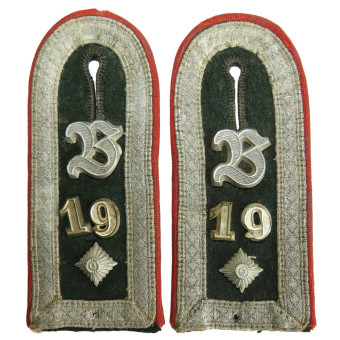
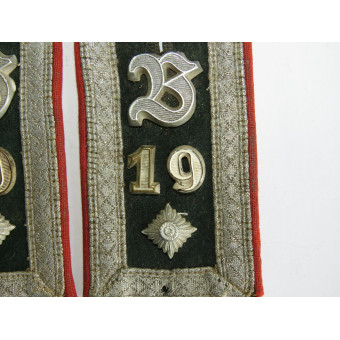
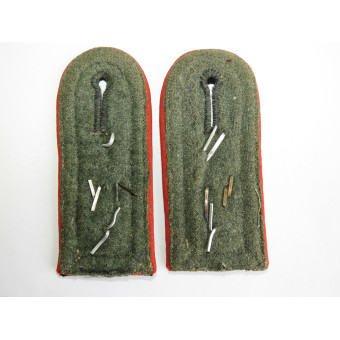
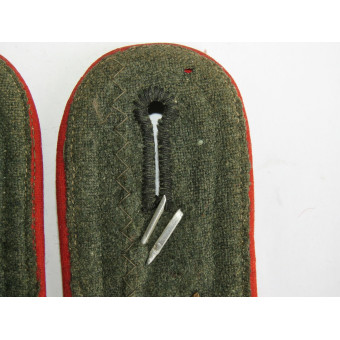
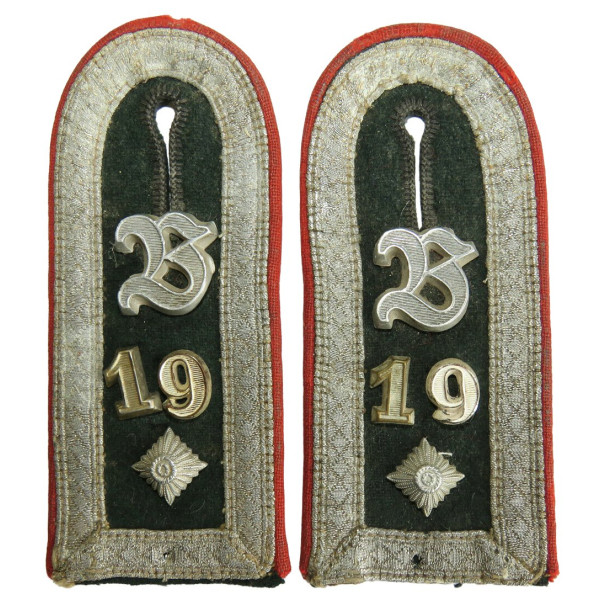
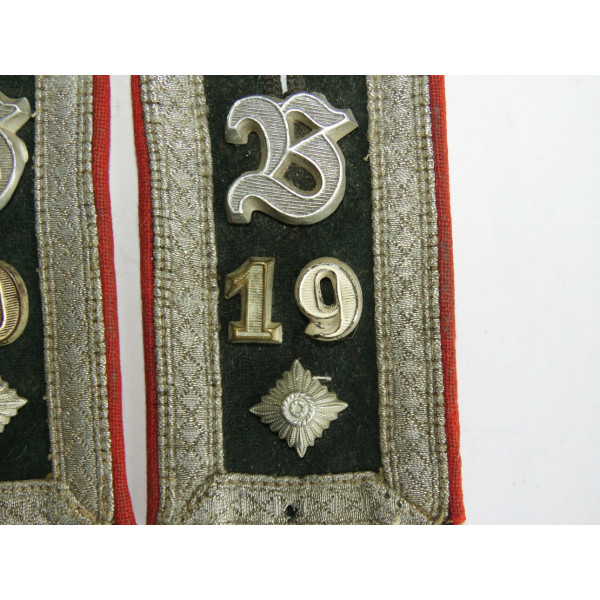
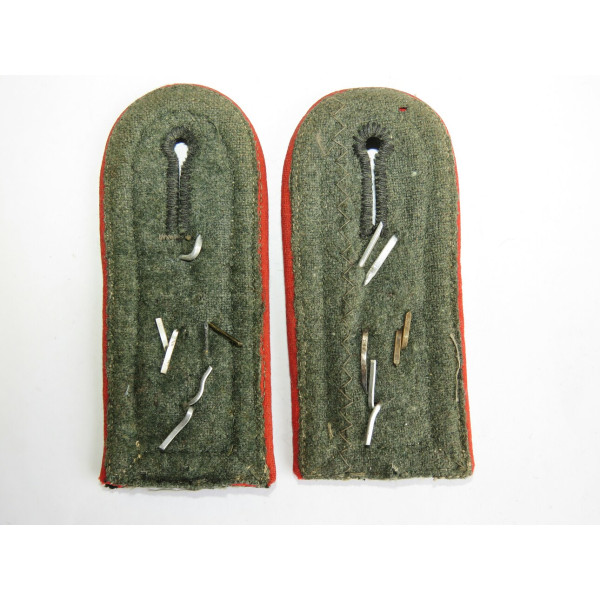
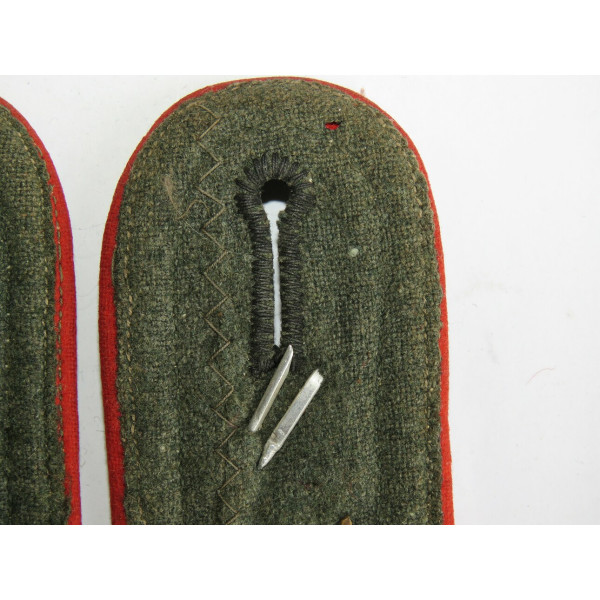
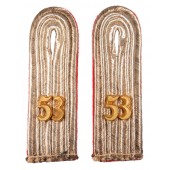
M 36 Sewn-In Feldwebel Shoulder Boards of the 19th Observation Battalion
Early sewn-in Feldwebel shoulder boards of the 19th Observation Battalion (Beobachtungs-Abteilung 19), model 1936, for the 19th Light Motorized Observation Battalion (leichte Beobachtungs-Abteilung 19 (motorisiert)). The shoulder boards show heavy traces of use.
The shoulder boards belong to a Wehrmacht artillery observation unit formed on August 26, 1939 in Braunschweig, XI Military District (Wehrkreis XI), for the 19th Infantry Division (19. Infanterie-Division).
The unit included:
survey battery (Vermessungs-Batterie),
sound ranging battery (Schallmess-Batterie),
flash spotting battery (Lichtmess-Batterie).
The battalion was responsible for artillery target surveying, enemy artillery sound ranging, flash observation and artillery fire correction. Feldpost numbers of the unit:
battalion headquarters (Stab) – 16721,
1st survey battery (1. Vermessungs-Batterie) – 13544,
2nd sound ranging battery (2. Schallmess-Batterie) – 22363,
3rd flash spotting battery (3. Lichtmess-Batterie) – 13282.
During the 1939 Polish Campaign the unit operated with the 19th Infantry Division (19. Infanterie-Division) in the Rosenberg / Upper Silesia (Rosenberg / Oberschlesien) area. Advance elements of the division moved through Zimna Woda and Parzymiechy before reaching prepared Polish forest defensive positions. After fierce fighting for populated areas, German troops stormed the Polish positions at dawn on September 2, 1939. The division then pursued retreating Polish forces toward the Warta River (Warta). Near Albertow, Polish resistance was broken after a short but violent engagement. By evening, division elements reached the western bank of the Warta under Polish artillery fire, and on September 3 crossed the river despite destroyed bridges.
In 1940 the unit participated in the Western Campaign, operating in the regions of the Lower Rhine (Niederrhein), Belgium (Belgien) and France (Frankreich), providing artillery reconnaissance and fire correction for divisional artillery units.
After the beginning of the Eastern Campaign, the battalion was transferred to central Russia. The unit conducted counter-battery observation, identified Soviet artillery positions through sound ranging, observed artillery flashes and corrected German artillery fire. The battalion operated under the harsh combat conditions of the Eastern Front, supporting advancing Wehrmacht formations in the central sector of the front.
On April 1, 1942 the formation was reorganized into the 19th Light Motorized Observation Battalion (leichte Beobachtungs-Abteilung 19 (motorisiert)), while the 1st survey battery (1. Vermessungs-Batterie) was dissolved. On November 21, 1942 the battalion received a balloon platoon (Ballonzug) from the 103rd Balloon Battery (Ballon-Batterie 103), used for aerial observation and artillery spotting duties. The last known combat operations of the unit were carried out with the 4th Panzer Army (4. Panzerarmee) in Upper Silesia (Oberschlesien).
Replacement personnel for the battalion were supplied by the 31st Replacement Observation Battalion (Beobachtungs-Ersatz-Abteilung 31) in Braunschweig, XI Military District (Wehrkreis XI).
Description
Early sewn-in Feldwebel shoulder boards of the 19th Observation Battalion (Beobachtungs-Abteilung 19), model 1936, for the 19th Light Motorized Observation Battalion (leichte Beobachtungs-Abteilung 19 (motorisiert)). The shoulder boards show heavy traces of use.
The shoulder boards belong to a Wehrmacht artillery observation unit formed on August 26, 1939 in Braunschweig, XI Military District (Wehrkreis XI), for the 19th Infantry Division (19. Infanterie-Division).
The unit included:
survey battery (Vermessungs-Batterie),
sound ranging battery (Schallmess-Batterie),
flash spotting battery (Lichtmess-Batterie).
The battalion was responsible for artillery target surveying, enemy artillery sound ranging, flash observation and artillery fire correction. Feldpost numbers of the unit:
battalion headquarters (Stab) – 16721,
1st survey battery (1. Vermessungs-Batterie) – 13544,
2nd sound ranging battery (2. Schallmess-Batterie) – 22363,
3rd flash spotting battery (3. Lichtmess-Batterie) – 13282.
During the 1939 Polish Campaign the unit operated with the 19th Infantry Division (19. Infanterie-Division) in the Rosenberg / Upper Silesia (Rosenberg / Oberschlesien) area. Advance elements of the division moved through Zimna Woda and Parzymiechy before reaching prepared Polish forest defensive positions. After fierce fighting for populated areas, German troops stormed the Polish positions at dawn on September 2, 1939. The division then pursued retreating Polish forces toward the Warta River (Warta). Near Albertow, Polish resistance was broken after a short but violent engagement. By evening, division elements reached the western bank of the Warta under Polish artillery fire, and on September 3 crossed the river despite destroyed bridges.
In 1940 the unit participated in the Western Campaign, operating in the regions of the Lower Rhine (Niederrhein), Belgium (Belgien) and France (Frankreich), providing artillery reconnaissance and fire correction for divisional artillery units.
After the beginning of the Eastern Campaign, the battalion was transferred to central Russia. The unit conducted counter-battery observation, identified Soviet artillery positions through sound ranging, observed artillery flashes and corrected German artillery fire. The battalion operated under the harsh combat conditions of the Eastern Front, supporting advancing Wehrmacht formations in the central sector of the front.
On April 1, 1942 the formation was reorganized into the 19th Light Motorized Observation Battalion (leichte Beobachtungs-Abteilung 19 (motorisiert)), while the 1st survey battery (1. Vermessungs-Batterie) was dissolved. On November 21, 1942 the battalion received a balloon platoon (Ballonzug) from the 103rd Balloon Battery (Ballon-Batterie 103), used for aerial observation and artillery spotting duties. The last known combat operations of the unit were carried out with the 4th Panzer Army (4. Panzerarmee) in Upper Silesia (Oberschlesien).
Replacement personnel for the battalion were supplied by the 31st Replacement Observation Battalion (Beobachtungs-Ersatz-Abteilung 31) in Braunschweig, XI Military District (Wehrkreis XI).
Payment & Delivery