Your shopping cart is empty!
« back
« back
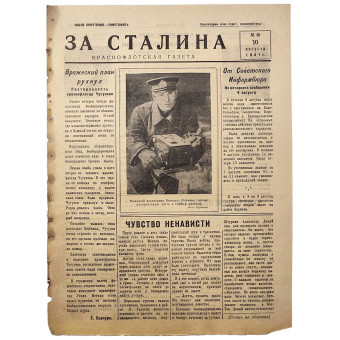
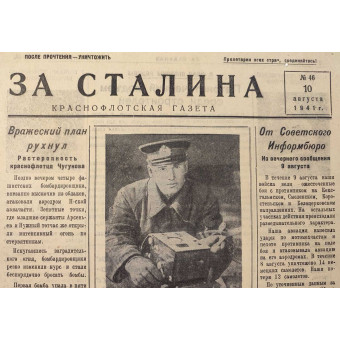
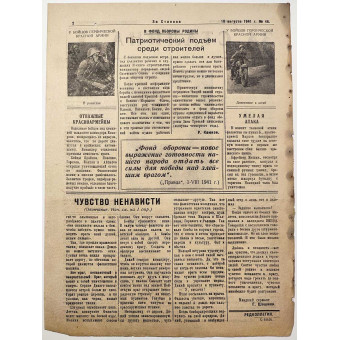
Naval newspaper "For Stalin" dated August 10, 1941
Product Code: a16/13
Price:
On hold
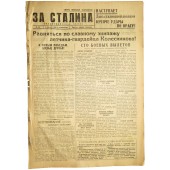
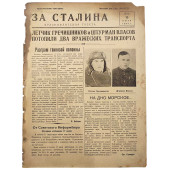
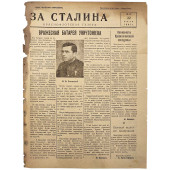
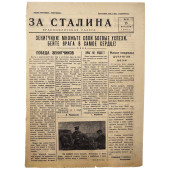
For Stalin, No. 46, August 10, 1941
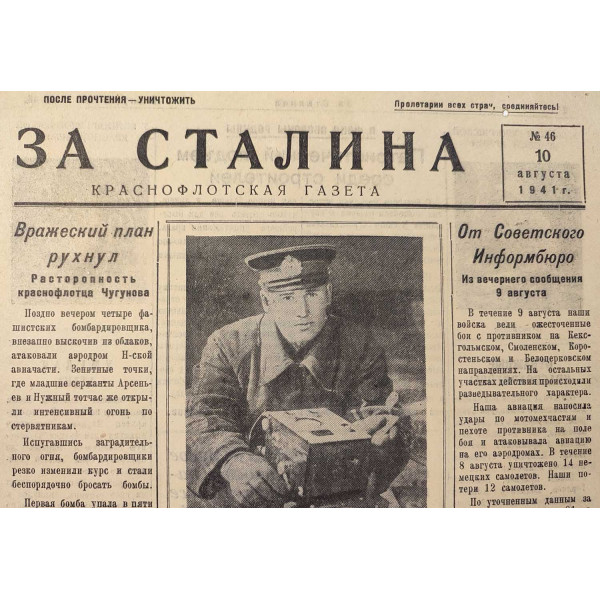
Red Navy newspaper
TO BE DESTROYED AFTER READING
Workers of the world, unite!
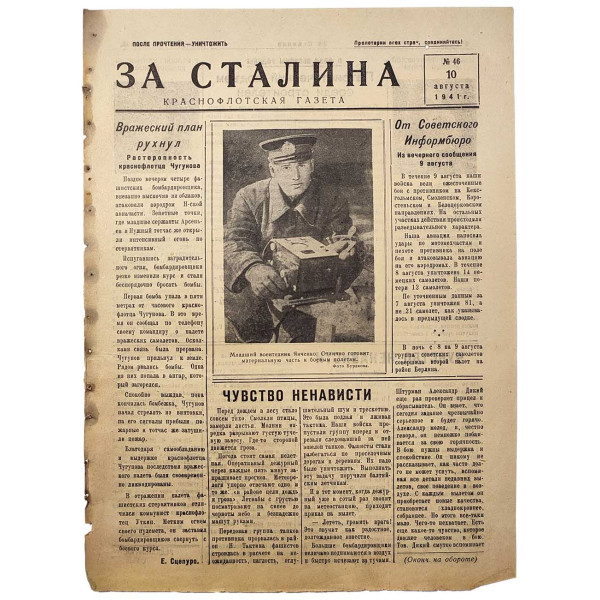
THE ENEMY’S PLAN HAS FAILED
Alertness of Red Navy sailor Chugunov
Late in the evening, four fascist bombers suddenly emerged from the clouds and attacked the airfield. The earth shelters, where Junior Sergeants Arsenov and Lukin were positioned, immediately opened intense fire. The bombers dropped their bombs chaotically and veered off.
A new group of aircraft was spotted from the observation post. Communication was severed by shrapnel. Without losing a second, Red Navy sailor Chugunov rushed to headquarters under fire. Two minutes later, he was already reporting to the communication center.
Thanks to his composure, the consequences of the attack were promptly eliminated.
— E. Sitsuro
FROM THE SOVIET INFORMATION BUREAU
Report for August 9
Fighting continues on the Kexholm, Smolensk, Voronezh, and Belgorod fronts. In other areas — reconnaissance activity.
Soviet aviation struck enemy motorized units and airfields.
On August 8 alone, 14 German aircraft were destroyed (12 of them bombers).
From August 1 to 7 — 321 aircraft were destroyed.
On the night of August 8–9 — a second raid on Berlin.
Junior military technician Yanchenko efficiently prepares equipment for combat flights
Photo by Burakov
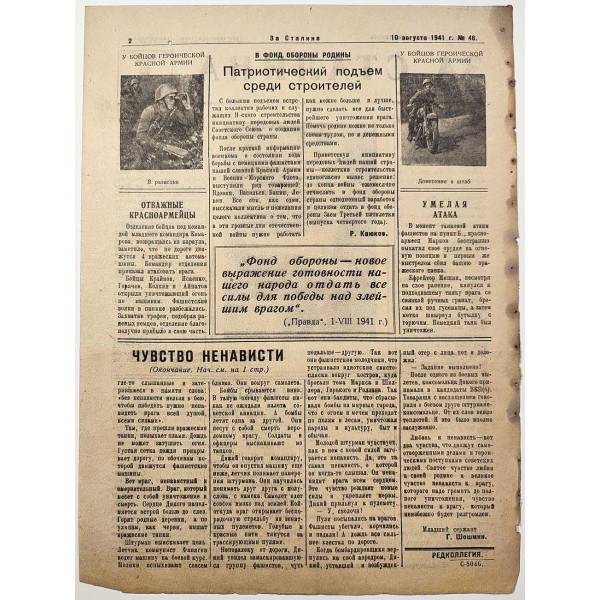
BRAVE RED ARMY SOLDIERS
A group of fighters led by Junior Commander Komarov captured enemy trenches in battle. Red Army soldiers Alekseev, Matveev, Levin, Dmitriev, and Petrov returned with trophies.
PATRIOTIC SURGE AMONG CONSTRUCTION WORKERS
Work crews and office staff at the construction site donated a day’s wages to the Defense Fund.
The collection was initiated by the fleet command.
The third brigade raised over 3,000 rubles.
— R. Kayukov
The Defense Fund is a new expression of the people's readiness to give all their strength for victory over the fiercest enemy.
— Pravda, August 1, 1941
SKILLFUL ATTACK
During a tank assault on Point B., Red Army soldier Markov fearlessly rolled his gun into position and with the first shot blew off a tank’s turret.
Despite being wounded, Corporal Mishin rushed toward the tank with a bundle of hand grenades, placed them under its tracks, then threw a bottle of flammable liquid. The German tank was destroyed.
THE FEELING OF HATRED
(Beginning on page 1, continued on pages 2 and 3)
Before the rain, the forest became completely still. Birds fell silent, leaves froze. Lightning occasionally tore through the thick cloud cover. A thunderstorm was moving somewhere nearby.
The weather was utterly unsuitable for flying. Every five minutes the duty officer requested a forecast. Meteorologists stubbornly repeated the same words: “Rain and thunderstorm in the area.” The pilots looked mournfully at the dark blue sky and shook their heads hopelessly.
An enemy tank vanguard had broken into the N. region. The fascist tactics relied on surprise, audacity, deafening noise, and chaos. It was vile and cunning. Our troops let the lead group through and cut off the following tank echelon. The fascists scattered along country roads and into villages. They had to be destroyed. This task was assigned to the Baltic pilots.
And at the moment when the duty officer called the weather station for the hundredth time, the order to take off arrived.
To fly — to crush the enemy!
It sounded like joyful, long-awaited news.
The heavy bombers majestically took to the air and quickly vanished into the clouds.
Navigator Alexander Dikin checked his bombsight and release mechanism one more time. He knew this mission was exceptionally serious and would be intense. Alexander was young and, to be honest, a little worried about his own impetuousness.
In battle, composure and calm were essential. He never told anyone how he often lay awake, reliving every detail of previous sorties, his actions in the air. With each flight, he gained new qualities, becoming cooler and more collected. But it still wasn't enough. Something was missing. There was another feeling that drove a person in battle.
Comrade Dikin vaguely remembered words he’d heard somewhere:
“You can’t win a battle without hatred — to win, you must hate the enemy with your whole soul, with all your strength.”
Where the enemy tanks had passed, flames now burned. The rain could not extinguish the fire. A thick curtain of rain veiled the road, along which enemy vehicles moved.
There they were — the hateful, loathsome enemy. The enemy that brought fire and death. Dikin’s heart filled with a pain so sharp it brought tears. His native villages were burning, while fascist tanks crawled through the streets like worms.
The navigator searched for a target. Pilot-Communist Fishchin guided the aircraft on its combat course. Lightning flashed nearby. It surrounded the plane. Bombs dropped.
In such weather, the fascists hadn’t expected a Soviet air raid. But the bombs kept falling. They brought death to the treacherous enemy. Soldiers and officers leapt from their tanks.
Dikin told the commander to bring the plane even lower. The pilot understood his intent. They had learned to communicate without words. On the roadside — a tank. Somewhere, the enemy opened disorganized anti-aircraft fire. Blue tracer bullets stretched behind the plane.
Not far from the road, Dikin spotted a camouflaged group of fascists, and another group further on. So here they were — the Nazi thugs who held idiotic dances around bonfires where they threw in volumes of Marx and Schiller, Gorky and Rolland. The bandits who bombed peaceful cities, who swept across fields and forests with fire and sword, destroying people, culture, traditions, and life itself.
The young navigator felt a new surge of hatred ignite within him. Yes, this was the very hatred he’d once heard about. He hated the enemy with all his heart. That feeling gave him strength and forged his will.
Dikin squinted —
“Bastards!”
Bullets rained down on the enemy. The fascists fled, writhed, and fell! And the rain beat harder on the road.
When the bombers returned to their airfield, Dikin, exhausted and exhilarated, wiped the sweat from his face and reported:
“Mission accomplished!”
After one of his combat flights, Komsomol member Dikin was nominated as a candidate for the Communist Party (Bolsheviks). His comrades spoke admiringly of the combat navigator-Komsomol member. Their words were full of warmth — and it was well deserved.
Love and hatred — these are the two feelings that drive the selfless actions and heroic deeds of Soviet people. The sacred love for the Motherland and the great hatred for the enemy — the enemy who must be destroyed completely, the enemy who will inevitably be defeated.
— Junior Sergeant G. Shoshin
Description
For Stalin, No. 46, August 10, 1941
Red Navy newspaper
TO BE DESTROYED AFTER READING
Workers of the world, unite!
THE ENEMY’S PLAN HAS FAILED
Alertness of Red Navy sailor Chugunov
Late in the evening, four fascist bombers suddenly emerged from the clouds and attacked the airfield. The earth shelters, where Junior Sergeants Arsenov and Lukin were positioned, immediately opened intense fire. The bombers dropped their bombs chaotically and veered off.
A new group of aircraft was spotted from the observation post. Communication was severed by shrapnel. Without losing a second, Red Navy sailor Chugunov rushed to headquarters under fire. Two minutes later, he was already reporting to the communication center.
Thanks to his composure, the consequences of the attack were promptly eliminated.
— E. Sitsuro
FROM THE SOVIET INFORMATION BUREAU
Report for August 9
Fighting continues on the Kexholm, Smolensk, Voronezh, and Belgorod fronts. In other areas — reconnaissance activity.
Soviet aviation struck enemy motorized units and airfields.
On August 8 alone, 14 German aircraft were destroyed (12 of them bombers).
From August 1 to 7 — 321 aircraft were destroyed.
On the night of August 8–9 — a second raid on Berlin.
Junior military technician Yanchenko efficiently prepares equipment for combat flights
Photo by Burakov
BRAVE RED ARMY SOLDIERS
A group of fighters led by Junior Commander Komarov captured enemy trenches in battle. Red Army soldiers Alekseev, Matveev, Levin, Dmitriev, and Petrov returned with trophies.
PATRIOTIC SURGE AMONG CONSTRUCTION WORKERS
Work crews and office staff at the construction site donated a day’s wages to the Defense Fund.
The collection was initiated by the fleet command.
The third brigade raised over 3,000 rubles.
— R. Kayukov
The Defense Fund is a new expression of the people's readiness to give all their strength for victory over the fiercest enemy.
— Pravda, August 1, 1941
SKILLFUL ATTACK
During a tank assault on Point B., Red Army soldier Markov fearlessly rolled his gun into position and with the first shot blew off a tank’s turret.
Despite being wounded, Corporal Mishin rushed toward the tank with a bundle of hand grenades, placed them under its tracks, then threw a bottle of flammable liquid. The German tank was destroyed.
THE FEELING OF HATRED
(Beginning on page 1, continued on pages 2 and 3)
Before the rain, the forest became completely still. Birds fell silent, leaves froze. Lightning occasionally tore through the thick cloud cover. A thunderstorm was moving somewhere nearby.
The weather was utterly unsuitable for flying. Every five minutes the duty officer requested a forecast. Meteorologists stubbornly repeated the same words: “Rain and thunderstorm in the area.” The pilots looked mournfully at the dark blue sky and shook their heads hopelessly.
An enemy tank vanguard had broken into the N. region. The fascist tactics relied on surprise, audacity, deafening noise, and chaos. It was vile and cunning. Our troops let the lead group through and cut off the following tank echelon. The fascists scattered along country roads and into villages. They had to be destroyed. This task was assigned to the Baltic pilots.
And at the moment when the duty officer called the weather station for the hundredth time, the order to take off arrived.
To fly — to crush the enemy!
It sounded like joyful, long-awaited news.
The heavy bombers majestically took to the air and quickly vanished into the clouds.
Navigator Alexander Dikin checked his bombsight and release mechanism one more time. He knew this mission was exceptionally serious and would be intense. Alexander was young and, to be honest, a little worried about his own impetuousness.
In battle, composure and calm were essential. He never told anyone how he often lay awake, reliving every detail of previous sorties, his actions in the air. With each flight, he gained new qualities, becoming cooler and more collected. But it still wasn't enough. Something was missing. There was another feeling that drove a person in battle.
Comrade Dikin vaguely remembered words he’d heard somewhere:
“You can’t win a battle without hatred — to win, you must hate the enemy with your whole soul, with all your strength.”
Where the enemy tanks had passed, flames now burned. The rain could not extinguish the fire. A thick curtain of rain veiled the road, along which enemy vehicles moved.
There they were — the hateful, loathsome enemy. The enemy that brought fire and death. Dikin’s heart filled with a pain so sharp it brought tears. His native villages were burning, while fascist tanks crawled through the streets like worms.
The navigator searched for a target. Pilot-Communist Fishchin guided the aircraft on its combat course. Lightning flashed nearby. It surrounded the plane. Bombs dropped.
In such weather, the fascists hadn’t expected a Soviet air raid. But the bombs kept falling. They brought death to the treacherous enemy. Soldiers and officers leapt from their tanks.
Dikin told the commander to bring the plane even lower. The pilot understood his intent. They had learned to communicate without words. On the roadside — a tank. Somewhere, the enemy opened disorganized anti-aircraft fire. Blue tracer bullets stretched behind the plane.
Not far from the road, Dikin spotted a camouflaged group of fascists, and another group further on. So here they were — the Nazi thugs who held idiotic dances around bonfires where they threw in volumes of Marx and Schiller, Gorky and Rolland. The bandits who bombed peaceful cities, who swept across fields and forests with fire and sword, destroying people, culture, traditions, and life itself.
The young navigator felt a new surge of hatred ignite within him. Yes, this was the very hatred he’d once heard about. He hated the enemy with all his heart. That feeling gave him strength and forged his will.
Dikin squinted —
“Bastards!”
Bullets rained down on the enemy. The fascists fled, writhed, and fell! And the rain beat harder on the road.
When the bombers returned to their airfield, Dikin, exhausted and exhilarated, wiped the sweat from his face and reported:
“Mission accomplished!”
After one of his combat flights, Komsomol member Dikin was nominated as a candidate for the Communist Party (Bolsheviks). His comrades spoke admiringly of the combat navigator-Komsomol member. Their words were full of warmth — and it was well deserved.
Love and hatred — these are the two feelings that drive the selfless actions and heroic deeds of Soviet people. The sacred love for the Motherland and the great hatred for the enemy — the enemy who must be destroyed completely, the enemy who will inevitably be defeated.
— Junior Sergeant G. Shoshin
Payment & Delivery